The map is not the territory -
Constructs & Perception
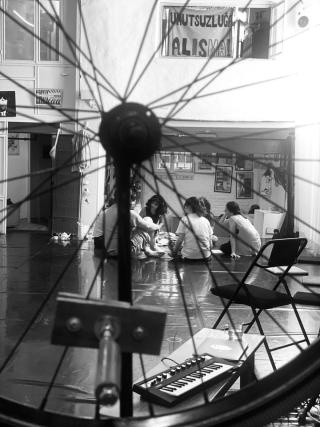
A banner has been hanging in a rehearsal space in Istanbul for over 20 years:
“Umutsuzluğa alışma!” – don’t get used to hopelessness.
But what can we do when reality becomes a narrative and democratic values come under pressure? In 2025 and 2026, we are collaborating with the Istanbul-based collective Çıplak Ayaklar Kumpanyası (ÇAK) and Urban.Koop on precisely this question. Together, we have chosen the annual theme “The map is not the territory – Constructs and Perception.” In addition to ÇAK, we are also collaborating with the urban designers at Urban.Koop on this topic. Our starting points are current political developments, the shared history of Germany and Turkey, and ongoing migration movements.
What It’s About
Political narratives shape perception, identity, and how we live together. In an era of growing polarization, where freedom of speech is under pressure and authoritarian tendencies are on the rise, we ask ourselves fundamental questions:
- What can we do when democratic values are eroding?
- Who is allowed to speak and about what?
- How can we engage with one another, despite differing perspectives?
- How can we act in solidarity, despite unequal structures?
- How can we use the tools of art to combat forgetting and the erosion of democracy?
- How can artistic practice create spaces where new forms of coexistence, empathy, and understanding become possible?
Art as Action
We see art as action—not as a place of retreat. Together with artists from Germany and Turkey, we are developing a collective practice that opens up spaces for dialogue and empathy, explores forms of solidarity-based collaboration, and highlights artistic strategies for dealing with political pressure.
Our reality is constructed and can be changed.
ÇAK is an independent artists’ collective from Istanbul that has been shaping the contemporary dance and performance scene since 2003. For decades, their rehearsal space has been an open venue for exchange, where artists work, learn, and build networks. As part of the project, we were guests there for two weeks together with around 30 artists. This collaboration is not only an artistic exchange but a shared learning process: How does art remain capable of action—even under pressure?
Why Turkey? Why Germany? Why now?
Germany and Turkey are closely linked by migration and history. At the same time, both countries—as indeed the whole of Europe—are witnessing developments that pose significant challenges to artistic freedom and democratic discourse. Turkey is not merely a place where tensions are escalating, but also a space for experiencing and learning about creative, resistant, and solidarity-based practices. We want to learn from these perspectives and translate them into a shared dialogue, bringing people together and bringing all of this to the stage.
We live in a time that demands a re-examination of constructs—including our own cultural imprints—while we question the very nature of reality itself. As artists from Turkey and Germany, our work addresses this shared concern. In a world where public discourse is increasingly shaped by populism and polarization, critical voices face censorship and the expression of public opinion is strictly controlled. Populist simplifications and polarizing narratives hinder genuine dialogue. This is precisely where our project begins: Using artistic means, we explore how reality emerges and how new forms of belonging, responsibility, and coexistence can develop from it.
Change arises in shared space—through encounter, negotiation, and collective visions.
THEORETICAL FRAMEWORK
As early as the 1930s, Alfred Korzybski proposed the theory that the picture we form of the world is merely a representation—not reality itself. Our models, concepts, and narratives are tools for understanding the world, but they remain, by necessity, incomplete and subjective.Communication researcher Paul Watzlawick takes up this idea in “How Real Is Reality?”: There is no objective reality independent of its interpretation—our reality is constructed. In his “Peugeot Theory,” historian Yuval Noah Harari describes how collective fictions such as nations, corporations, or religions exist solely through shared belief—and are therefore, in principle, subject to change.
How real is reality?
This intellectual tradition forms the theoretical foundation of our project: How is a “shared belief” in and a shared development of Europe possible—despite distances and differences? Increasingly, national and religious frameworks are being invoked in Europe and presented as immutable. At the same time, in a globalized, complex world, the need for simple explanations is growing. Populism—as the simplest form of such attempts at explanation—is gaining traction, deepening divisions, fostering a “us versus them” mentality, and preventing genuine dialogue.Our project addresses this point of rupture: Using artistic means, we aim to explore and make visible the mechanisms of construction and perception, and to develop new perspectives on identity, belonging, and responsibility together with artists and the audience. In our experience, this can only succeed in a shared space, through joint negotiation and the collective development of visions.
But how can we even connect with one another? across differences, distances, and perspectives?
Previous productions in collaboration with our partners in Istanbul
Artlab 2025
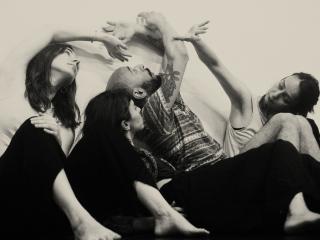
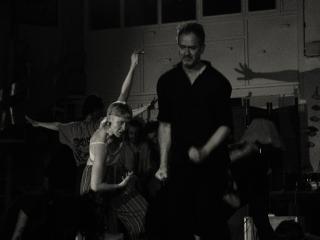
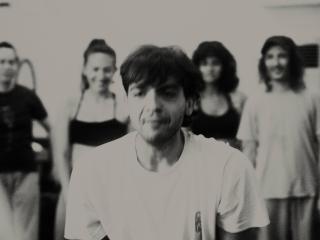
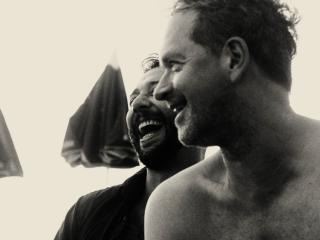
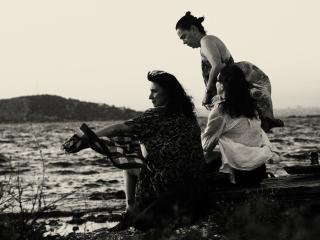
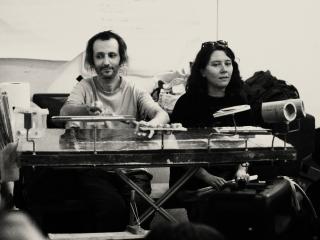
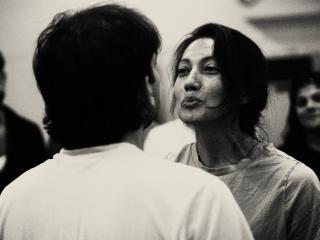
“The map is not the territory – Constructs, Perception” was a ten-day transcultural research lab (art-lab) that took place in Istanbul in the summer of 2025. In a collaboration between bridgeworks (Cologne) and the Istanbul-based collective Çıplak Ayaklar Kumpanyası (ÇAK), 25 artists from Turkey and Germany explored how political narratives, media images, and cultural influences shape our perception of reality—and how artistic practice can create new spaces for democratic dialogue, diversity, and understanding.The lab was complemented by dialogue and evening events featuring speakers who, under the title “Constructs & Perception,” facilitated discussions on freedom of expression, diversity, and artistic responsibility.
Echoes
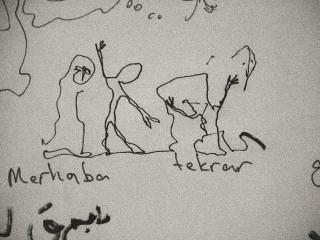
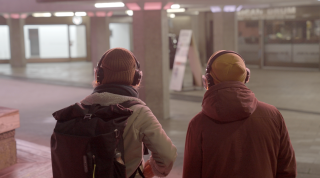
ECHOES was an installation-based, artistic soundwalk that took place simultaneously in Cologne and Istanbul in 2025. Developed by bridgeworks and Çıplak Ayaklar Kumpanyası (ÇAK), it created a transcultural format that does not overcome difference but makes it audible—as a shared space in sound, in shared time, and in active listening. Two groups of participants were connected via a live audio link: voices, music, and sound fragments moved between the cities. Building on the Art-Lab “The map is not the territory – Constructs, Perception”, ECHOES translated its central questions into the urban space and explored issues of memory, perception, and resonance: Through walking and listening together, a temporary space of resonance emerged in which difference was not dissolved but became tangible—as shared time, as sound, and as a possibility for connection.
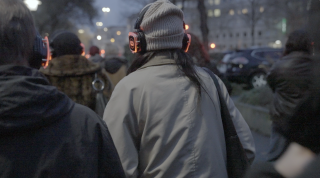
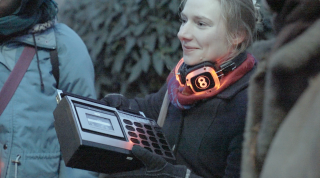
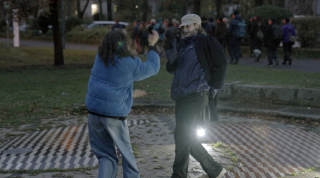
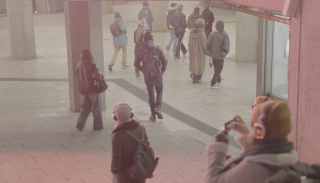
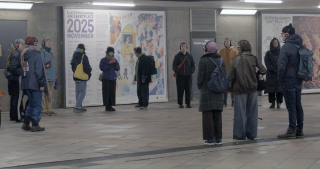
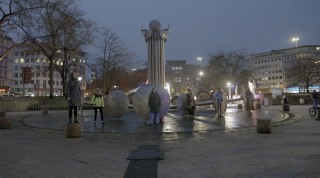
Which voices are heard, which are ignored, and how do narratives shape our understanding of reality?
Towards home away
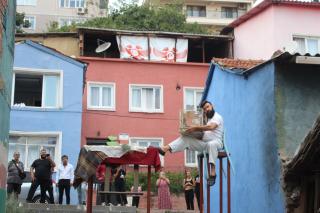
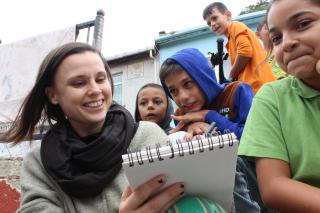
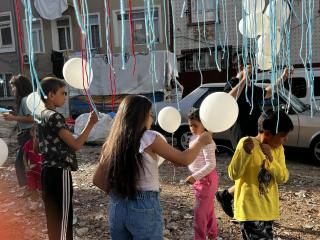
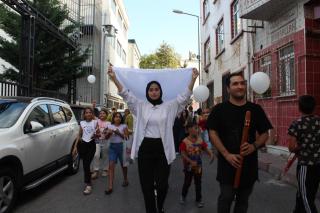
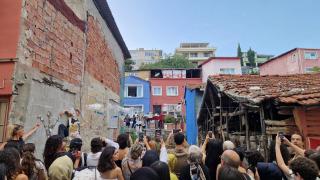
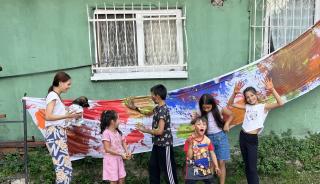
T owards Home Away was a 10-day site-specific art project that took place in 2024 in the Ayvansaray district of Istanbul—a historic neighborhood on the Golden Horn where migration, urban transformation, and diverse social realities intersect. In collaboration with the Hubban Network, an association of artists who have migrated to or sought refuge in Turkey, artists from Turkey and Germany worked together on-site.
-
How do large cities take shape as a result of changing population inflows?
- How can we capture the connections, overlaps, and interactions between generations in the city?
- What does it mean to arrive somewhere new—as a “stranger”?
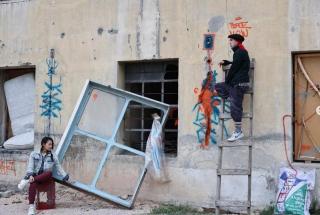
Exploring the tension between belonging and alienation, the group developed a performance format based on these questions, accompanied by urban interventions by urban.koop and ankaraaks. The process culminated in a public performance and workshops with the local community.
Hubban advocates for understanding migrant communities not as “the other,” but as co-creators of the city—and for opening up spaces where new forms of coexistence can emerge.
Motorhane Open Stage
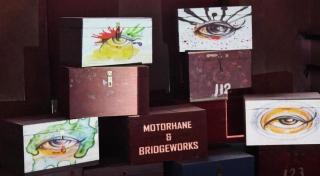
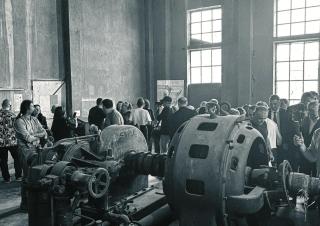
Motorhane Open Stage was a site-specific performance project that took place in 2025 at Motorhane in Merzifon, a former power plant in a structurally disadvantaged neighborhood that was temporarily transformed into an open stage. In collaboration with the Motorhane Cultural Network (MoKA), bridgeworks, and Urban.koop, theater groups from Merzifon, Amasya, and Sinop, as well as artists from Germany who had not previously worked together, came together. Over the course of a week, they developed a performance in collaboration with musicians and the local community that took place across the entire industrial site. On-site workshops and encounters were a central part of the process. Motorhane thus became a site of collective practice—and a starting point for new artistic networks and long-term collaboration.