


COOPERATION AND THEME 2026 + 2027
Syncretism & Ambiguity
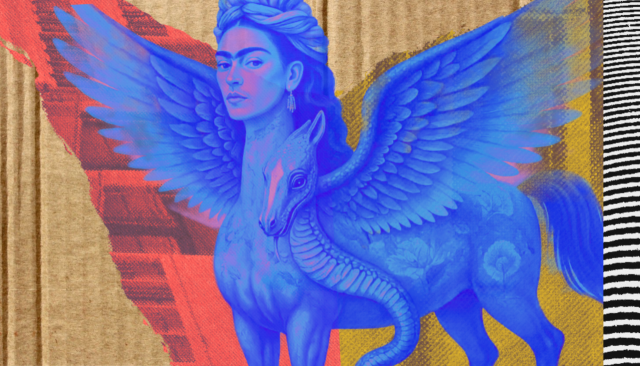
SYNCRETISM & AMBIGUITY - BEYOND THE BINARY
With its 2026/2027 thematic focus—Syncretism & Ambiguity—bridgeworks opens up a space for exploration that resists the desire for unambiguous answers. Together with our partners from Circuito Liquen in Mexico, we embark on a search beyond binary logics—both in the discourse on identity and gender and in a closed understanding of national cultures. By recognizing these constructs as fluid spectra, we create space for identities beyond colonial and normative categorization. In an era marked by political polarization and digital echo chambers, we do not view the collaboration between Mexican and German artists as a bridge between two fixed and clearly defined cultures. Rather, we understand it as a shared positioning within the simultaneity in which identities, histories, and futures are constantly intermingling. At the heart of our work lie syncretism and ambiguity - two concepts we will understand not as abstract theory, but as lived practice.
Syncretism is, for us, far more than the mere sum of cultural traits; it is a radical form of re-creation under pressure. It draws on the Mexican experience of an identity that has emerged from the ruins of colonialism, the resilience of indigenous cosmology, and hypermodernity. When this wealth of experience encounters a Germany that is laboriously learning to reorganize its own polyphony as a post-migrant society, a field of tension with high energetic density emerges. We are searching for the “third,” for that aesthetic that only emerges when we exchange the fear of losing control for curiosity about the hybrid.
In this context, ambiguity serves as our psychological and sociological compass. It is about broadening our perspective:
How much uncertainty can we tolerate before we take refuge in the supposed security of national or ideological patterns?
In art as in politics, the ability to allow contradictions to coexist without forcibly resolving them has become a matter of survival. We examine how collective narratives—from the culture of remembrance in Germany to the discourses surrounding mestizaje in Mexico—can be deconstructed to make room for a present that is defined not by separation but by interconnection.
Our understanding of ambiguity, however, is radically distinct from arbitrariness and imprecision. The architecture of violence and fascism is always a generalizing, obscuring, and imprecise language that erases nuances and dehumanizes the other. We advocate the opposite: a tender yet precise articulation. For us, this precision is an act of empathy. We set out in search of a common language that names differences without fixing them and embraces them rather than leveling them out. By not ignoring what divides us but using it as a starting point, we transform differences into qualities, into an invitation to honest encounter and artistic practice.
This process is inextricably linked to a critical revision of foreign cultural and educational policy. For us, truly fair collaboration means not only naming structural and economic asymmetries but actively subverting them through our working methods. We practice a redistribution of the power to define. This means that we leave the classic donor-recipient hierarchy behind and renegotiate project management, budgetary authority, and the final aesthetic decision-making within a process of shared ownership. We decolonize not only the content presented, but the infrastructure of the collaboration itself. (
fair cooperation)
We invite our audience and our partners to recognize the “knowledge” we have about one another and our “conception of the world” for what it has always been: a useful but incomplete construct—a subjective interpretation. The focus of our joint research in the coming period is on the unfinished and the ever-changing.
In our upcoming productions, residencies, and discourses, we will understand syncretism and ambiguity as a philosophical necessity in order to remain capable of acting in a fragmented world.
Partner
CIRCUITO LIQUEN
Circuito Liquen is a transdisciplinary platform dedicated to the creation, exploration, and production of cultural works in the fields of the performing arts, installation, performance, and cultural management. The organization was founded in 2003 in Aguascalientes, Mexico, and has 23 years of experience working in Mexico, Colombia, Argentina, Spain, Germany, and other countries.
Its language employs symbolic translation as a primary means of making experiences accessible and developing democratic alternatives in the face of profound social change. It is led by the Mexican-Iranian performance artist and art curator Saeed Pezeshki together with Miriam Castañeda. In addition to its current collaboration with bridgeworks for artlab 2026, Circuito Liquen has previously worked with institutions such as the Goethe-Institut, the Teatro Colón in Bogotá, the National Center for the Arts in Colombia, the Stockholm Dance Museum, and festivals across five continents. For the artlab 2026 project, Circuito Liquen serves as a strategic partner in Mexico and creates a space for exchange.
Funded & Supported by

Dates
art-lab Mexiko-City: 8.- 24. August 2026
art-lab Germany-Cologne: Spring 2027
OPEN CALL!
UNTIL JUNE 14:
APPLY FOR OUR ART-LAB OPEN CALL!
Dialogue Digital
Starting in Autumn 2026


